
Computational Mechanics and Intelligent Systems Lab
We advance predictive computational mechanics for intelligent structural systems. Our research integrates nonlinear mechanics, fracture and failure modeling, and topology optimization with scalable numerical methods and high-performance computing to enable physically grounded, design-ready simulation.
A recent thrust of the lab is the development of AI-enabled and hybrid quantum–classical algorithms that remove computational bottlenecks in large-scale design and uncertainty analysis. These methods are embedded within rigorous mechanics formulations to accelerate simulation while preserving physical fidelity. Reliability, rare-event estimation, and uncertainty quantification are integrated directly into design workflows to support robust performance assessment and certification-grade decision making.
Research Focus Areas
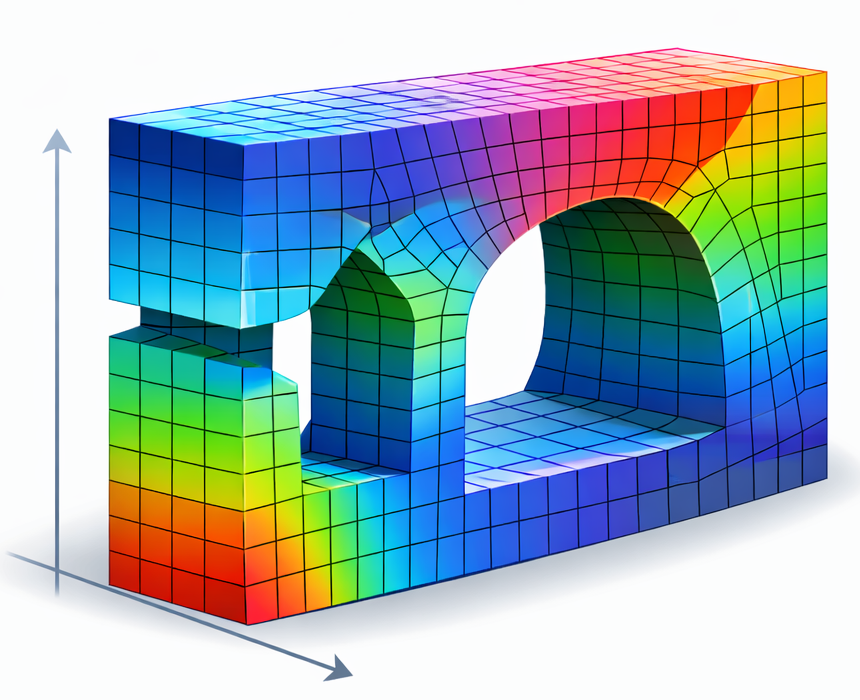
Computational Mechanics & FEM
We develop verified, high-fidelity finite element methods for nonlinear deformation, fracture, and dynamic failure—paired with scalable implementations and calibration workflows that support predictive simulation.

Quantum Computing for Mechanics
We build hybrid quantum–classical algorithms that target computational bottlenecks in mechanics, including accelerated uncertainty quantification, rare-event estimation, and optimization loops using variational circuits and amplitude-estimation-style primitives.
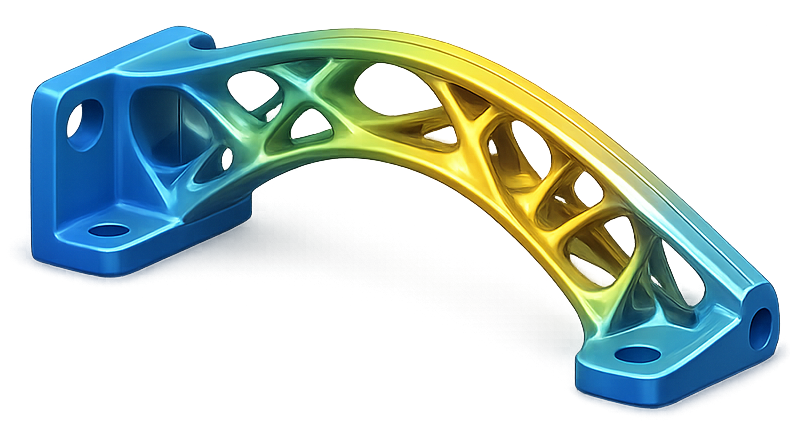
Topology Optimization & Intelligent Design
We develop physics-informed topology optimization and learned surrogates for fast, constraint-aware design, emphasizing manufacturability, robustness, and efficient exploration of high-dimensional design spaces.
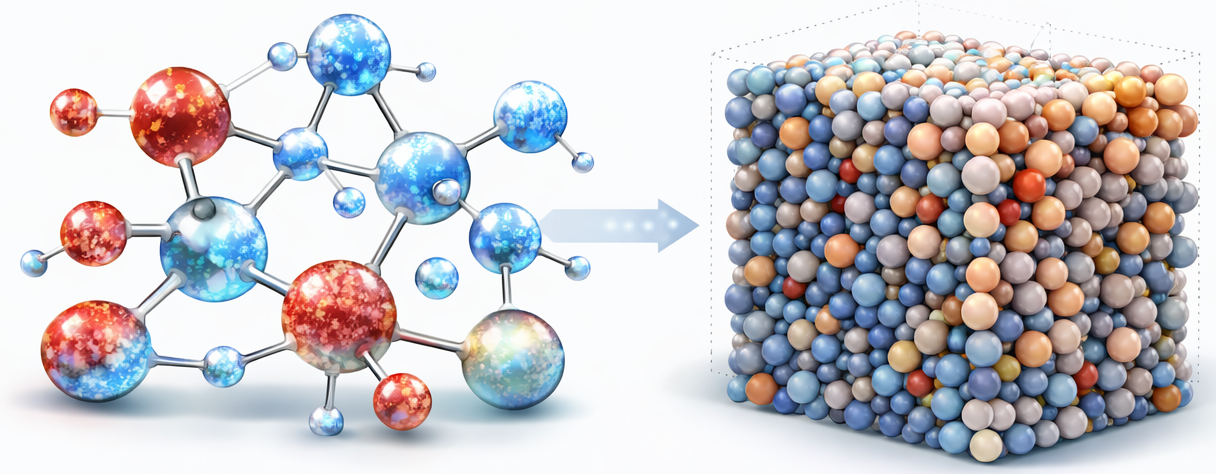
Multiscale Modeling & Molecular Dynamics
We connect atomistic mechanisms and continuum response through multiscale frameworks that combine MD/DFT-informed physics with continuum constitutive modeling—aiming for mechanistic, transferable prediction from microstructure to performance.
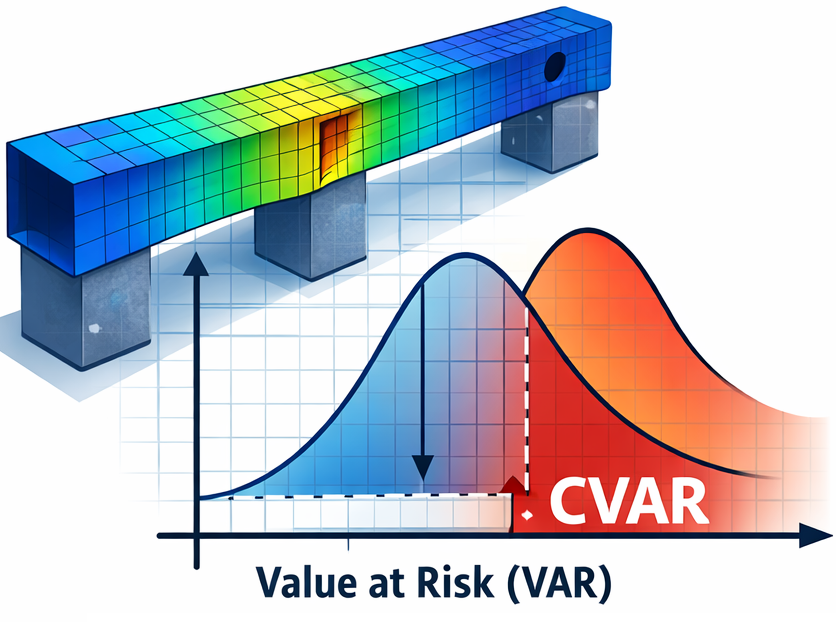
Reliability & Uncertainty Quantification
We develop stochastic mechanics tools for spatially correlated uncertainty, rare-event estimation, and risk-aware decision metrics—supporting reliability assessment and certification-oriented workflows when confidence matters.
Join the lab
We welcome highly motivated PhD/MS/undergraduate students and collaborators interested in computational mechanics, quantum-enabled engineering algorithms, topology optimization, and multiscale modeling. If you’re interested in joining or collaborating, please reach out.


